
McClelland & Stewart
Review by Brian Tanguay
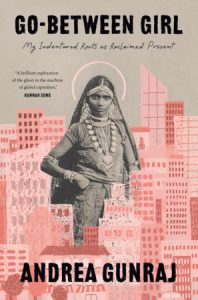
For nearly three centuries, transatlantic chattel slavery was the preferred source for colonial labor, the bodies required to cultivate and harvest sugar, rice, tobacco and cotton. When moral concerns eventually led to a staggered abolition of chattel slavery, colonial powers turned to indentured laborers, many from India, to work plantations, mills and mines. Between 1830 and 1930, as many as fifty million people were transported by European powers, a massive migrant movement. Often known as coolies, these workers were bound by conditions of indentureship very different from those that had governed white indentured workers; far more punishing, dehumanizing and constricted. Contracts varied in length from five to ten years. Upon fulfillment workers were free to return home, but a majority stayed.
“What is common to all racialized indentured workers,” writes Andrea Gunraj, whose ancestors were among those who remained, “is the marinade of white supremacy they’re soaked in, the notion that racialized populations are best suited to work for white interests.” Accounts of indentured workers are rare, few memoirs or autobiographies were written and official documents such as ship rosters, letters and work agreements offer little insight into the daily lives of the indentured. Many indentured workers were illiterate and signed their contracts with a fingerprint. Their reasons for leaving home can only be surmised. Perhaps they were fleeing famine, debt, abuse or war. Many were misled by unscrupulous recruiters whose income depended on bodies.
Gunraj does a remarkable job illustrating the reality of indentured labor, attempting, as she puts it, to teleport her body into that of her ancestors, to witness, touch, taste and smell what they experienced in Guyana. It’s often horrifying. Indentured workers had no rights, they could be beaten, whipped or have their wages withheld for minor infractions. Life was brutal, oppressive and worker revolts were subdued with violence. An expressive writer, even poetic at times, Gunraj effectively weaves details with her own imaginings. The book is a meditation on identity, place and belonging, tracing the past to find the present, an often uncomfortable journey. Gunraj worries that there’s something trivializing about taking a place beside her ancestors, and occasionally she finds her efforts at reclamation perverse. What can she — living an easy Western life — possibly have in common with her ancestors? Gunraj was a suburban kid, overprotected, her life revolved around school and church. She didn’t define herself as South Asian or consider herself a product of long-ago ancestors. Such realizations came with time and education, with wide reading and contemplation.
My favorite chapter in this book is titled “Pepperpot,” a Guyanese culinary dish that Gunraj’s mother made at Christmastime. Gunraj remembers the components: cubes of pink beef, gristly nubs of oxtail, the jar of Guyanese cassareep sauce on the counter, the hours of cooking, and how the dish was always better the day after. “My family and I hunched over our bowls to breathe it in as soon as we could, the cinnamon and cloves perfuming each inhale.” Cassareep sauce is a mystery, a family secret, the glory of the pepperpot. More than a dish, pepperpot is a link to the indigenous people of Amazonia and the miracle of the humble cassava.
Go-Between Girl is vividly written and manages to be both specific and universal, an argument for more belonging and collective recognition of our shared fate.