
One Signal
Review by Brian Tanguay
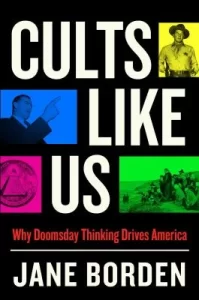
I met Jane Borden at the inaugural Santa Barbara Literary Festival. As I listened to her talk about her book, Cults Like Us, I was reminded of The Confidence Man by Herman Melville, a novel about a shapeshifting con artist working marks on the Mississippi River. Melville tapped into a strain of gullibility that seems inherent in the American character. Why do we fall prey to charlatans, gurus, cult leaders and authoritarian politicians? Why are we so hungry to believe? Cults Like Us attempts to answer these questions at a moment when the consequences of swallowing the false promises and magical thinking of a career con man are painfully obvious.
“Cults and conspiracy theories,” writes Borden, “are kissing cousins: they share DNA, often look alike, and sometimes get married.” In prose that is informative and witty, Borden takes us back to the Puritans, known in their time as “apocalypticists,” who believed the end of the world was imminent and only a chosen few would survive. Borden argues that Puritan doomsday beliefs became part of American culture, which perhaps explains — in part at least — why so many cults and wild conspiracy theories find fertile ground here. Of course, apocalyptic beliefs aren’t limited to the US. Followers of the Unite the Kingdom movement in the UK believe that unchecked immigration is driving the country and its “civilization” to a breaking point. Immigration of “others” or “outsiders” is an emotional and exploitable issue.
Remember Pizzagate? Back in 2016, prominent Democratic Party leaders were accused of running a sex-trafficking ring out of Comet Ping Pong, a popular Washington DC pizzeria. Despite being easily debunked, many still believe. Conspiracy theories have three primary characteristics in Borden’s view: the alleged conspirators wield tremendous power, usually of a global nature; they tend to be intellectuals who prey on the less intelligent; and they present such a threat to our way of life that they must be stopped.
After taking us on a tour of New Thought, Scientology, est, Christian Science, the rags-to-riches stories of Horatio Alger and the positive thinking of Napoleon Hill and Dale Carnegie, Borden dives into multi-level marketing schemes like Amway, a red, white and blue amalgam of capitalism, Christianity and the promise of wealth and freedom through hard work. We’re also introduced to Edward Bernays, the influential advertising guru who was the nephew of Sigmund Freud. Borden describes Bernays as a “magician pirate” who pioneered ad campaigns instilling the idea that by buying particular products a person could express his or her inner sense of self. Consumer consumption went beyond fulfilling basic needs, it was a measurement of status and belonging, the old in-group, out-group idea central to influencing masses of people.
Why do we join cults, whether religious or secular? What do they offer that the outside world fails to provide? According to Borden, cults become attractive when reality feels out of control. Cults offer refuge from perceived chaos or injustice, an explanation for the way things are and an oasis of certainty in an uncertain and threatening world; the paradox is that control is gained by surrendering it to a cult leader. Because the pace of change in our contemporary world is disorienting and often enervating, the allure of certainty is understandable. Who doesn’t want something solid to hold? There’s no shortage of evidence that we suffer from anxiety, loneliness and isolation, states of being exacerbated by social media algorithms that drive us from true community and solidarity, making us vulnerable to gurus and autocrats promising to deliver nirvana or a social and political order that never existed.
One of the most enduring American creeds is that anyone can start with nothing and hit the mother lode. Not only can each of us have it all, we deserve to. Reality says otherwise and the concentration of wealth into ever fewer hands over the past fifty years should have put the lie to this notion, but the popularity of day-trading, gambling apps and crypto currencies attests to its resiliency. Who doesn’t want to strike it rich? All things considered, it does appear that we remain a nation of suckers.