
Essay by Brian Tanguay

I acquired American Visions by Edward L. Ayers and Democracy In Black by Eddie S. Glaude Jr., at the same time, but had no conscious intention of reading them in tandem. It was only after I was well into both that I realized what the books had in common. Ayers’ book took shape as an undergraduate seminar at the University of Richmond, in which students read classics of American literature in historical context. Glaude’s book, published seven years earlier, opens in Ferguson, Missouri, still reeling from the police killing of Michael Brown, an unarmed black teenager.
American Visions covers a lot of ground, from the consequential election of 1800 to the eve of the Civil War, focusing on the literature, art, utopias and religious currents that emerged in this sixty year period. Ayers tracks how Americans’ perceptions of themselves and their young republic changed over time, particularly as the country expanded its territory by way of the Louisiana Purchase, the dispossession of Indigenous people and the spoils of the Mexican-American War. Territorial expansion thrust the single most divisive American issue to the fore: slavery. Should the institution of human property expand to new states or be confined to the existing southern states? This question prompted bloody violence and political compromises, animating the writings of Harriet Beecher Stowe, Ralph Waldo Emerson, Henry David Thoreau and Walt Whitman. Frederick Douglass risked his life advocating for an end to slavery; other abolitionists did the same. Signs of social dissolution were unavoidable throughout the 1850s, and Ayers writes that the nation lacked the resilience “to weather the long-building crisis that threatened to engulf everyone and everything.” By the eve of the Civil War, Americans had spent their goodwill, patience and trust. The land of “perpetual becoming” had reached an unbridgeable divide.
Glaude cites an observation Dr. Martin Luther King Jr. made in his last book, Where Do We Go from Here: Chaos or Community? King observed that white Americans operated from a premise that racial equality was a loose expression for improvement. By that time, the shackles of Jim Crow segregation had been broken, civil and political rights secured through historic legislation, but the idea that racial justice was a charitable enterprise, something white people bestowed on black people, persisted. Glaude argues persuasively that charity isn’t equality, and confronting this fact would go a long way toward achieving racial justice in this country. “For much of our national history,” writes Glaude, “we have struggled mightily with the issue of race. The evil of slavery shadowed the birth of this country.”
White fear is a theme in both books. In the antebellum period, the prospect of slave revolts terrified white planters and citizens alike. Americans were well aware of what happened to the French in Haiti. The same fear manifested during the urban unrest of the 1950s and 60s. “White fear,” writes Glaude, “is the general frame of mind that black people are dangerous, not only to white individuals because they are prone to criminal behavior, but to the overall well-being of our society.” This notion feeds the idea that any civil or political gains made by black people — or Latinos and Muslims — come at the expense of white people. But does genuine racial equality mean the end of white America — or just white dominance?
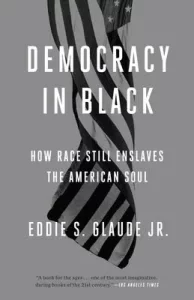
In 2026 it seems we’re as far from an honest appraisal of our past as ever as the federal government attempts to sanitize our racial history and dictate how history is taught in schools and portrayed in museums. Hoary arguments about slavery being a beneficial arrangement for black people are resuscitated; white fear remains a potent political weapon. Active forgetting, Glaude notes, is one of the ways white supremacy sustains itself. Even the election of a black president failed to narrow the value gap between white and black lives. In fact, an argument can be made that Barack Obama’s election alone, not his steady governing hand across two terms, sparked white fear that became a backlash that featured in the election of Donald Trump. Glaude is unsparing in his criticism of Obama, writing, “President Obama’s measured talk about race shows how racial habits work in this country. They work by keeping the reality of racial inequality hidden in plain sight.” I often faulted Obama for his caution, but I came to understand just how unforgiving the path he walked was, how he couldn’t afford to act out or make a misstep.
Obviously, racial injustice is the bridge that connects these books. Americans have made progress, but in this time of backlash we see how persistent and durable assumptions about race can be. Change is difficult, and solutions rarely perfect, but that’s where democracy comes into play. Democracy, however, is a continuous activity that cannot be left to others, no matter how well intentioned. Progress won isn’t permanent: we must be prepared and willing to soil our hands defending it.