
Harper Perennial
Review by David Starkey
Olive Editions is an annual series of small-format publications of eight of top science fiction and fantasy titles on Harper Perennial’s list. For mass market paperbacks, the books are quite elegant, with stylish cover illustrations by Ibrahim Rayintakath. The series debuted in 2008, and each year’s books are available for a limited time at reasonable prices, which makes each release something of an event.
Nevertheless, when the senior director of publicity approached me about reviewing this year’s books, my initial impulse was to shake my head and say, “This isn’t our kind of work.” The California Review of Books is not known for covering science fiction and fantasy titles, and I wasn’t sure this was the time to start. However, the more I thought about it, the more I began to wonder: “Why not?”
So, with the proviso that these books are outside the genres I normally review, here is my attempt to open my mind to a different way of seeing and writing about the world. Devotees of these authors should take my assessments with a large grain of salt, especially since, in the spirit of page-turning popular literature, and realizing how many pages I had to cover in a limited amount of time, I often read the books rather quickly. As I did so, I felt myself going back to an earlier period in my reading life, when books were purely for leisure, an enjoyable way to pass the time without having to account for how an author contrived an effect, or why I responded the way I did, or what the social ramifications were of the work I was reading.
At least that was my experience until, from my jumbled stack of books, I finally reached one by an author I’d never heard of: Justin C. Key. Expecting another novel set in a faraway world with a complex cast of characters and backstories, I instead encountered a collection of eight narratives that were clearly using fantasy, science fiction, alternate history and horror as a way to tell stories that had real-world heft. It was a more than satisfying way to conclude my reading.
Granted, I don’t think I’ll ever be a huge fan of fantasy and science fiction, but I do have new appreciation for the skill it takes to create a work of popular fiction, and in the future I’ll be more open to books at which, previously, I might not have given a second glance.

Highfire
by Eoin Colfer
The Highfire of the title is Wyvern, Lord Highfire, possibly the last dragon left on the planet. The time is the present, and Vern, as he’s known in the novel, wears a Flashdance T-shirt, drinks vodka, and is hiding out in a Louisiana swamp to avoid going the way of all his predecessors.Vern rightly doesn’t trust humans, so his friendship with fifteen-year-old Squib Moreau, a poor but resourceful denizen of the bayou, turns out to be a surprise to both of them. Add to the mix Regence Hooke, a vengeful, murderous and thoroughly corrupt cop with eyes for Squib’s mother, and the story pretty much writes itself. Colfer is the author of the hugely popular Artemis Fowl fantasy novels for young adults, as well as a couple of crime novels, and Highfire combines those elements in a creatively comic way. It’s not a novel I would normally have picked up, but it is one that I would recommend to anyone wanting a quick read with a salty narrator and plenty of action.
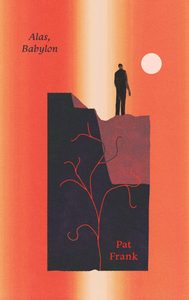
Alas, Babylon
by Pat Frank
Reading Alas, Babylon, I immediately flashed back on a book that made a big impression on me in my early teenage years: Nevil Shute’s post-apocalyptic On the Beach, published in 1957. In that book, a group people in Australia are waiting for the nuclear radiation from a war in the northern hemisphere to drift downwind and kill them. By contrast, Pat Frank’s book, published in 1959, begins just before a thermonuclear war between the United States and the Soviet Union. In Frank’s novel, the characters live in a small town in Central Florida, the ironically named Fort Repose, which is surrounded by Air Force bases that are sure to be the target of nuclear attacks. Amazingly, the community survives, in a kind of celebration of survivalism, although we learn toward the end that three-quarters of the population of the US has died in the war. There’s a real attention to detail in Alas Babylon–how to build and repair things, how to make it from one day to the next. In some ways, the novel adumbrates Cormac McCarthy’s The Road, but for all its death and destruction Alas, Babylon feels strangely optimistic about the essential dignity of ordinary Americans.
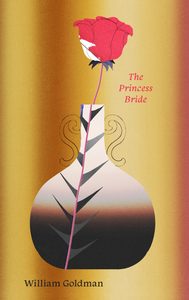
The Princess Bride
by William Goldman
Like a lot of people, I imagine, I have seen Rob Reiner’s movie The Princess Bride several times but never read the 380-page book. On balance, I think that’s probably okay. The film moves along at a brisk pace, covering basically the same ground as the novel, with its cast of memorable characters: Inigo Montoya and Fezzik, Buttercup and Westley, aka, Farm Boy, aka, the Dread Pirate Roberts. However, William Goldman, a celebrated screenwriter, inevitably slows things down in his fiction, which isn’t at all shy about becoming metafiction. There’s a lot more exposition and description and dialogue, which I imagine true fans of the movie might find extremely interesting. I’m afraid, though, that I began skimming somewhere around the time King Lotharon and Queen Bella began discussing the most appropriate bride for Prince Humperdinck. I would occasionally slow down, when there was a passage of amusing dialogue, or a particularly gripping description, for instance, the way Count Rugen’s evil Machine in the Zoo of Death tortures Westley with its soul-sucking suction cups. Unfortunately, I mostly felt myself a genre-outsider, knowing that what I found overlong would probably delight many readers.

Island
by Aldous Huxley
I read Island back in high school–or tried to–hoping to catch the same buzz that came with devouring Brave New World. My dim memory was that I had been disappointed by Island, Huxley’s last. Fifty years later, I have to report that my taste for novelistic philosophizing remains…underdeveloped. Apparently, if Brave New World was Huxley’s recipe for how not to organize a society, Island is the opposite. Honestly, there’s a lot of good advice in here about how to live a thoughtful, peaceful life: be present, be kind, take care of both your physical and mental health, take care of others, don’t neglect your spirituality. But, man, there’s a lot of talking–lecturing, really. Moreover, the fictional island of Pala, where all this instruction takes place, is truly a “utopia,” a “no-place” that could never withstand the constant and real pressures of human greed and stupidity, which Huxley ultimately acknowledges in a truly bleak ending.

The World Wasn’t Ready for You
by Justin C. Key
Justin Key is the only writer of color in this year’s Olive Editions, a fact emphasized not only by his book’s content, but also its afterword: “All too often speculative fiction has been a tool to reinforce the principles of white supremacy.” Key is also a full-time psychiatrist, and the experiences in his other career, combined with his interest in showing how the “Black experience is ripe for speculative fiction,” make the eight stories in The World Wasn’t Ready for You an gripping reading experience. Among my favorites were “Now You See Me,” about three white women who learn what it’s like to be Black; “The Perfection of Theresa Watkins,” about a husband who, through technology, is able to preserve and place the mind of his Black wife into the body of a white woman; “Afiya’s Song,” an alternate history in which African Americans overcome slavery through the power of song; the title story, about the relationship between a father and his son, who is both Black and an extraterrestrial; and “Customer Service,” a darkly comic story about the sinister power of AI, told in the form of an email chain. I would recommend The World Wasn’t Ready for You to readers of any and all genres.
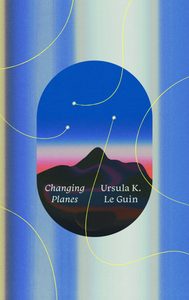
Changing Planes
by Ursula K. Le Guin
Along with The World Wasn’t Ready for You and Island, Ursula Le Guin’s Changing Planes is probably the most “literary” of this year’s Olive Editions. The book’s premise is relatively straightforward. A woman named Sita Dulap, sick of the “crowding, vile air, noise, and relentless tension” of airports, and waiting for a delayed flight, discovers that “by a mere kind of twist…she could go anywhere–be anywhere–because she was already between planes.” In the alternative universe of Changing Planes, pretty much everyone now does the same thing, and the book consists of descriptions of different “planes” people can visit. There is a story about a people who never sleep; another where everyone is royalty, so the one “commoner” family is treated like royalty; a third where “dreams are not private property,” and so are shared by everyone within range of the dreamer; and on and on. Each story is a kind of thought-experiment, some more intriguing than others, although the real-world message is clear: our imaginations are far more powerful than any annoying physical situations in which we may temporarily find ourselves.

Guards! Guards!
by Terry Pratchett
Terry Pratchett’s sense of humor shines through in his Preface: “They may be called the Palace Guard, the City Guard, or the Patrol. Whatever their name, their purpose in any work of heroic fantasy is identical: it is, round about Chapter Three (or ten minutes into the film), to rush into the room, attack the hero one at a time, and be slaughtered. No one ever asks them if they wanted to.” Giving these poor saps some agency is a catchy premise, and Pratchett does an excellent job of putting life into characters like Captain Sam Vimes and the good-hearted man mountain Carrot Ironfoundersson. That said, this is the eighth volume in Pratchett’s “Discworld” series, and I haven’t read any of the previous books. While the writing itself is energetic, and the setting, dialogue and action are well-balanced, a lot of the time I felt like readers of the previous seven books were probably getting a lot more out of Guards! Guards! than I was. Discworld is a flat planet balanced on the backs of four elephants standing on a giant turtle, which gives one a sense of the absurdity underlying the story, and Pratchett’s tongue is very much in his cheek in this tale of dragons and librarians, sybils and kings and the palace guards–known as the Watch–who turn out to be not such idiots after all.

The Hidden Palace
by Helene Wecker
Would it have been helpful before dipping into Helene Wecker’s 500-page sequel to The Golem and the Jinni to have read that earlier book? Absolutely, although Wecker is a good storyteller, and I was easily able to navigate the narrative of The Hidden Palace even if I sometimes felt as though I was missing an important reference here and there that would have added to the mood or meaning of a particular scene. In a nutshell, the story is this: Chava, a golem–a creature from Jewish folklore created from clay–who can hear people’s desires, exists in the form of a young woman attending Columbia University’s Teacher’s College. She’s in love with Ahmad, a fire creature trapped in human form, who spends his time metalworking in an abandoned building, also in Manhattan. To spice things up, the golem and the jinni from the first novel now have another golem, Yossele, and another jinni, Dima, to propel the plot. What happens when these supernatural creatures and their human connections become involved with one another? Suffice it to say, it’s complicated. The fantasy element aside, Wecker is a strong writer of historical fiction. The Hidden Palace is set in the years between 1900 and the beginning of the First World War, and she brings the New York of this time period vividly to life.