
Bloomsbury
Review by Brian Tanguay
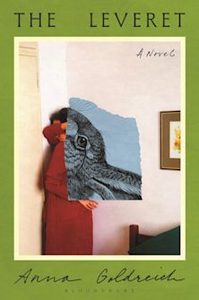
The Leveret came my way with some buzz about the high quality of the writing and I was keen to see if the buzz was justified. No question, it is. Anna Goldreich has produced a moving and elegant debut. She writes with more assuredness and clarity than a reader might expect in a first novel, telling a poignant and intimate story, full of sensuous detail and emotional heft. After losing their baby, Clare and Phoebe move to the country farm owned by Phoebe’s family. Both are emotionally devastated, but in different ways. Back on familiar childhood turf, Phoebe loses herself in work, while Clare, the newcomer, spends time alone, brooding about why they’re in this old house, with inlaws and parents popping in unannounced and unwanted. No one wants to talk about what happened. Phoebe’s family wants to talk about roses and camelias, the vegetable plot and the greenhouse, livestock and the local pub.
The point of view switches from Clare to Phoebe and back, prose for Clare, verse for Phoebe. “Sometimes,” Clare thinks, “I wish we’d never started. The whole thing, I wish we’d never done it.” The syringe full of sperm pushed into her felt intrusive and contrived, and it cost all the money her nanna left her. “It’s different with you, losing you,” Phoebe laments in response, “You’re still here so am I allowed to mourn our life?”
One day Clare finds a baby hare in the garden. Seemingly abandoned, it’s not more than a clump of earth, golden in color, an eye glowing bright. Clare picks the animal up and holds it to her face, smelling its scent, feeling its breath against her neck. Small as a fist. This sudden responsibility to care for a living thing, to nurture it fiercely, and love it the same. Clare takes the leveret home and makes a bed for it in a cardboard box, feeds it powdered kitten milk with a syringe, feels its heartbeat; a living thing needs her. Clare names the leveret Isla and becomes obsessed with mothering the animal. This might seem like a facile device — the leveret as a substitute for the lost baby — but Goldreich handles it with aplomb. “Each morning, I wake with the thrill of knowing that she will be there and we will get to spend another day together.” As she cuddles Isla, Clare remembers how she felt when she first met Phoebe, the need to know her and be known in return.
Inevitably, Isla’s wild nature asserts itself and the leveret becomes a terror, clawing holes in the walls and leaving the living room rug in tatters; Phoebe hates the smell of urine and scat, but feels powerless to do anything. Clare is kicked and bitten. How long can this go on? Alarmed by what she witnesses, Phoebe fears leaving Clare alone. Her family urges her to do something. Can these young women escape this spiral and find one another again? Anna Goldreich makes us hope they do.