
Bloomsbury
Review by Brian Tanguay
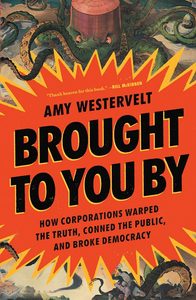
Truth or spin. Fact or opinion. Journalism or propaganda. In our time, information flows in volumes impossible to keep pace with and much of it is misleading by design. “Disinformation is a symptom,” writes Amy Westervelt in her new book, Brought To You By, “the natural result of a polluted information ecosystem, not unlike the algae or scum atop a pond some company has been dumping chemicals into for thirty years.” How our information ecosystem became polluted, what it means for citizens in a democracy, and what we can do about it is the focus of this book.
An investigative climate journalist by trade, Westervelt did some impressive archival research to introduce readers to some of the major players in corporate PR, like Ivy Ledbetter Lee, who was a top PR man for Standard Oil of New Jersey, known today as ExxonMobil. After World War I, Lee helped form the American Petroleum Institute, whose mission was to keep prices high and regulation low. Other industries followed suit, creating their own trade associations, alliances and networks, all designed to promote ideas of benevolent corporate citizenship, free markets, low taxation and minimal regulatory oversight. Over many decades, these entities have successfully defined the parameters of what is discussed in the public square. Can you recall the last time you saw reporting in legacy media about the minimum wage, union organizing or efforts to improve worker health and safety? That’s the point. What public relations does is “create, control, and mediate the relationship that a company, individual, or organization has with all the publics that might matter to them.” The general public is only one of many audiences.
When it comes to influencing the national narrative, the best example is climate science denial. Westervelt notes that in the late 1980s around seventy percent of the American population perceived global warming as a serious issue deserving of mitigation by industry and government. Less than fifteen years later, only half the country thought climate change warranted such action. What happened in the intervening decade and a half to so drastically alter public perception? A coordinated onslaught by corporate-funded university research, management consultants, think tanks, lobbyists, captured government regulators, and credulous media, all casting doubt on the science, insisting that too much was still unknown, even though the oil industry’s own scientists had warned years earlier about the potential consequences of greenhouse gasses. By flooding the information zone with doubt, the energy industry drowned out dire predictions of severe weather, hotter temperatures, prolonged droughts and more destructive wildfires.
Westervelt is blunt about these tactics, writing that, “Today, corporate corruption has so co-opted the public square, tilted the balance so far in favor of corporate speech over individual free speech, that it might be hard to recognize what even constitutes speech anymore, but it sure as hell isn’t lying to people to protect your profits.” This is the legacy of Ivy Lee, Edward Bernays, Daniel Edelman, Herb Schmertz and a Supreme Court that has consistently been deferential to corporate prerogatives. What Westervelt makes clear is that we arrived here by design, not accident. From climate change to capitalism, American perceptions and attitudes have been molded and reinforced by a relentless information — and disinformation — campaign.
In the final chapter Westervelt offers several suggestions for what can be done, including the important first step of accurately diagnosing the scope of the problem. It’s not simply identifying a “Joe Rogan of the left,” it’s about finding out why millions of Americans choose to get information from a failed comedian turned MMA color commentator. Democracy is unlikely to survive in an information ecosystem where reality is shattered, littered with half-truths, blatant falsehoods and cognitive dissonance. Moreover, the tech giants that control so much of what we see, read and hear display some distinctly autocratic tendencies.
I agree that restoring public confidence in the information ecosystem will require a host of legal and institutional reforms, reinvigorated civics education in schools, and greater media literacy on the part of consumers. But it will also require a long, hard examination of media ownership, confronting the handful of corporations who dominate the media landscape. As we’ve seen with the demise of CBS, Twitter (now X) and the Washington Post, ownership can significantly influence content.