
Pippa Rann
Review by Brian Tanguay
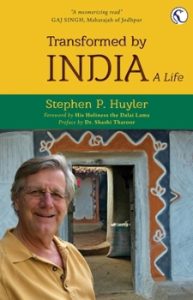
I was intrigued by Stephen P. Huyler’s description of his early travels, long before smartphones, GPS, language translation, and social media. Travel was more hit or miss then, far slower, and keeping in touch was often spotty and unreliable. Using one’s wits was essential. Huyler, a young man from Ojai, California, traveled thousands of miles by the same means as the local population, up close and intensely personal. India had only been independent for a quarter century when Huyler first arrived, and was still experiencing social and political growing pains.
Transformed by India is a mix of travelogue, memoir, and autobiography that unfolds chronologically. Because Huyler covers a lot of territory and several decades of activity, a chronological telling is understandable, though some of the significant details revealed in the last chapters of the book would have been useful to know earlier. Nonetheless, Huyler succeeds in relating the profound ways his experiences in India shaped the course of his life and that of his wife, Helene. Huyler was more than merely fascinated with India, its people, culture and art — India fully captured his heart and imagination. A singular obsession with Indian art compelled him to traverse the country and linger in places few Westerners would choose to visit. During his peregrinations Huyler amassed an enormous collection of artifacts. The process of packing and transporting these artifacts in an analog age required enormous patience; transactions moved at a slow and personal pace, accompanied by many obligatory cups of tea.
As a young man, Huyler was fortunate to make the acquaintance of artist Beatrice Wood. Wood influenced Huyler’s artistic education and the two remained close friends until Wood passed away at age 105. “Beatrice Wood,” Huyler writes, “was like her ceramics: lustrous, lit ineffably within by often surprising, always entrancing color, blending elegance and form with infectious humor.” Had Huyler not met and been mentored by Wood early on, he may still have traveled to India, but his attention might have been drawn to different artistic practices.
The author of several books about Indian art, Huyler also collaborated in the production of numerous museum exhibitions. Descriptions of how these exhibitions came about, and the labor involved in conceiving and curating a show, occupy much of the book. Along with his academic studies, Huyler was a self-taught photographer who amassed a huge collection of images, many of which accompanied the museum exhibitions. Later on, Huyler began leading small-group tours of India.
I found it refreshing that Huyler recognizes the privileges that accrued to him simply because he is white, male and American. With unflinching honesty he recounts the time invested in thinking, discussing and processing how these privileges facilitated his life’s work and ability to gain access to people and places. But more than that, he’s aware of the subtle ways being white, male and American may have influenced or prejudiced his perceptions. Such introspection is rare.
Transformed by India is the story of an unusual man who has led an extraordinary life following a passion kindled in him early on. First and foremost this account is a testament to the power of singular purpose and determination, but also to the immeasurable value of art and culture.