
New York Review Books
Review by Walter Cummins
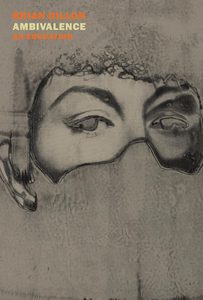
If Ambivalence were a novel, readers would have been left pending in the midst of an uncertainty, the protagonist trapped in a writers’ block, “when the writing does not come,” as with the final words of the book: “For a while in his first autumn away from home, a question gets stuck in his head—at the centre, what?” But Dillon’s book is a retrospective memoir that captures what it was like to have been lost and confused in the years from his mid-teens to his mid-twenties. Any reader going to a brief author’s bio will see the block far behind him in the impressive oeuvre of his books and articles.
Unlike many graduate students who never find their way out of a bind, Dillon has risen to success as a writer and scholar, able to articulate all the many thoughts that stymied him in his youth. While his story is hardly a how-to-do-it instruction guide for other young men and women in the midst of similar doldrums, it captures the confused uncertainties of a person struggling to realize an identity.
Much of the book focuses on Dillon’s detailed reading history, titles discovered on the shelves of local bookstores and libraries and, at times, the traditional choices in his father’s collection. It is mainly the English translations of the French structuralists and poststructuralists that captive him, especially Jacques Derrida and Roland Barthes, but also Virginia Woolf and Walter Benjamin. The sophistication of these obsessions contrast with Dillon’s performance in school, where he has to repeat several tests and where his mediocrity fails to earn a placement in an established university like Trinity College or University College Dublin.
Certain instructors saw more potential in Dillon than he saw in himself while he fixated on his consciousness of his inadequacies. Yet he did do well enough as an undergraduate at Rathmines Senior College for disappointed college applicants to qualify for University College and then an MA program, where his mentor was a man Dillion refers to by his initials, TD, as he does all of the people in his life at that time, including himself as B, writing about himself in the third person. He follows TD into a PhD program at Trinity College and eventually to the University of Kent when TD moves to England. Even in that graduate program, Dillon condemns himself as “a charlatan, a bullshitter, a poser.” That’s where the book ends, Dillon—just B—puzzling over his What?
Even though most specific information is devoted to details about Dillon’s reading and academic life, a sense of his emotional traumas slips in, especially the terminal illness of his mother when he was in his teens and the sudden fatal heart attack of his father when he entered his twenties. The impact of these losses, crucial as they were, is not discussed in detail. He does reveal, “Failure, as always, arrives slowly and then suddenly. For months he has known that the exams for which they are supposed to be preparing will be quite beyond him. He has done next to no schoolwork since his mother died in the summer of 1985.”
Like his references to being an orphan, other aspects of Dillon’s personal struggles are only touched on, including his alienation from his two brothers after their father’s death, involving physical battles with one. More mention is given to all the nights he spent in pubs and came home drunk.
Yet Dillon appears to have appealed to the friends identified by initials, those who joined him in the pubs. In fact, one envied his social life, a reaction that baffled him. This approval of others appears to have be similar to that of the instructors who saw academic potential in him. It’s Dillon who is a mystery to himself, struggling for an identity beyond that of the many books he reads. Ambivalence captures what it is like for a young man to be estranged from himself. A question that lingers when this condition is considered in the reality of his future success—has Dillon been able to put his troubled years behind him?